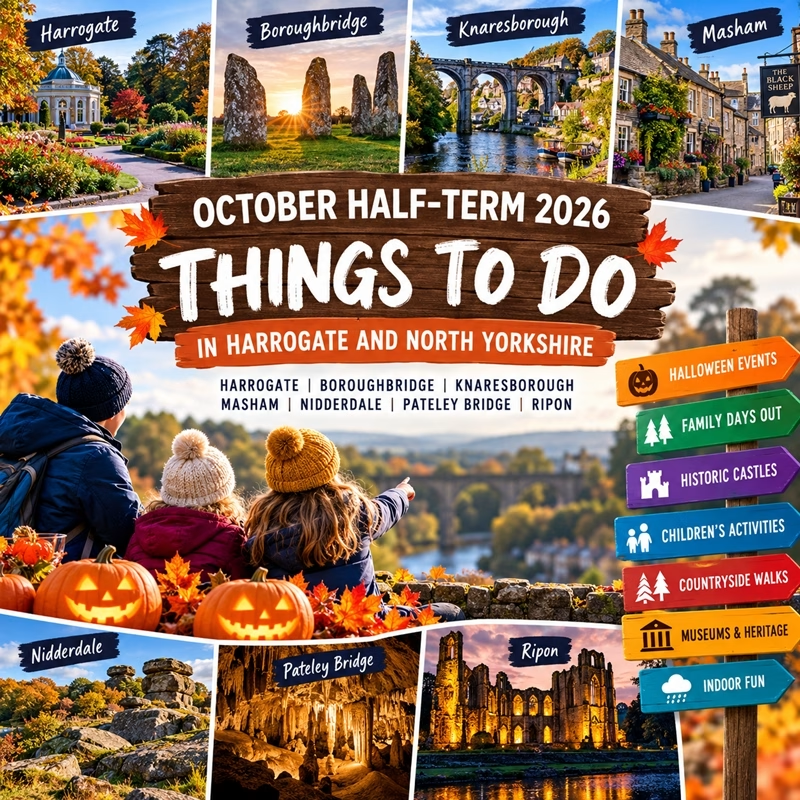
Harrogate Guide – October Half-Term 2026: 32 Fantastic Things to Do with the Kids Across…
Rare ‘mythical’ blue flowers
Rare ‘mythical’ blue flowers blooming in Harrogate could soon disappear forever, RHS warns
One of the world’s rarest and most breathtaking flowers has started blooming in Harrogate — but experts fear the spectacular display may not survive Britain’s changing climate for much longer.
The famous Himalayan blue poppies have begun flowering at RHS Garden Harlow Carr, creating a dazzling burst of electric blue rarely seen outside a handful of specialist gardens anywhere in the UK.
But while the blooms are attracting visitors from across Yorkshire and beyond, the Royal Horticultural Society says rising temperatures and increasingly dry weather are making the iconic flowers harder to grow every single year.
Visitors rushing to see rare Himalayan blue poppies before they vanish
The striking blooms only appear for a few short weeks between May and June — and gardening experts warn the display could become increasingly unpredictable as climate pressures intensify.
Known scientifically as Meconopsis, the flowers are native to the freezing mountain regions of Tibet and the Himalayas, where they grow in cool mist, constant moisture and thin alpine air. Recreating those conditions in England is notoriously difficult.
Their vivid sky-blue colour is so unusual in nature that early explorers believed the flower was almost mythical.
Now, RHS horticulturalists say even Yorkshire’s cooler climate may no longer be enough to guarantee future displays.
RHS Harlow Carr one of only a few places in England where they still thrive
Despite the growing challenges, RHS Garden Harlow Carr remains one of the best places in the country to witness the famous blooms.
The garden’s cool, damp microclimate around the Streamside and Peat Terraces has allowed the delicate flowers to survive where many other gardens have failed.
Thousands are expected to visit over the coming weeks as the blooms reach their peak.
Among the first to flower this year is the dramatic Meconopsis ‘Mophead’, which blooms before the hottest part of summer arrives.
The unbelievable journey that brought the flower to Britain
The Himalayan blue poppy’s story sounds like something from an adventure novel.
In 1913, British explorer Frederick Marshman Bailey discovered the flower growing among rocks and snow in eastern Tibet during a dangerous Himalayan expedition.
More than a decade later, legendary plant hunter Frank Kingdon-Ward tracked down the exact location and smuggled seeds back to Europe in sealed biscuit tins so they would survive the journey.
When the flowers finally bloomed publicly in Britain in 1926, they caused an international sensation.
This year marks exactly 100 years since the RHS first unveiled the extraordinary flower to the British public at the Chelsea Flower Show.
Why experts fear these iconic flowers could struggle to survive
Unlike most garden plants, Himalayan blue poppies are extremely sensitive to heat, drought and direct sunlight.
At Harlow Carr, the flowers depend entirely on natural rainfall rather than irrigation systems, leaving them especially vulnerable during heatwaves and prolonged dry spells.
RHS horticulturalist Aimee-Beth Browning said the flowers require “cool temperatures and constant moisture” — conditions becoming increasingly difficult to maintain naturally in the UK.
Experts now fear that climate change could make these stunning blue blooms far rarer in future years.
Best time to see the blooms in Harrogate
Visitors can already see the first Himalayan blue poppies opening now at RHS Garden Harlow Carr, with peak flowering expected over the next few weeks.
However, RHS says the display may begin fading before the garden’s Summer Garden Weekend from 19–21 June.
For many visitors, this could be one of the best — and possibly one of the last reliable opportunities — to witness one of nature’s most extraordinary flowers in full bloom in England.
Related Posts From Harrogate Blog